Latest news

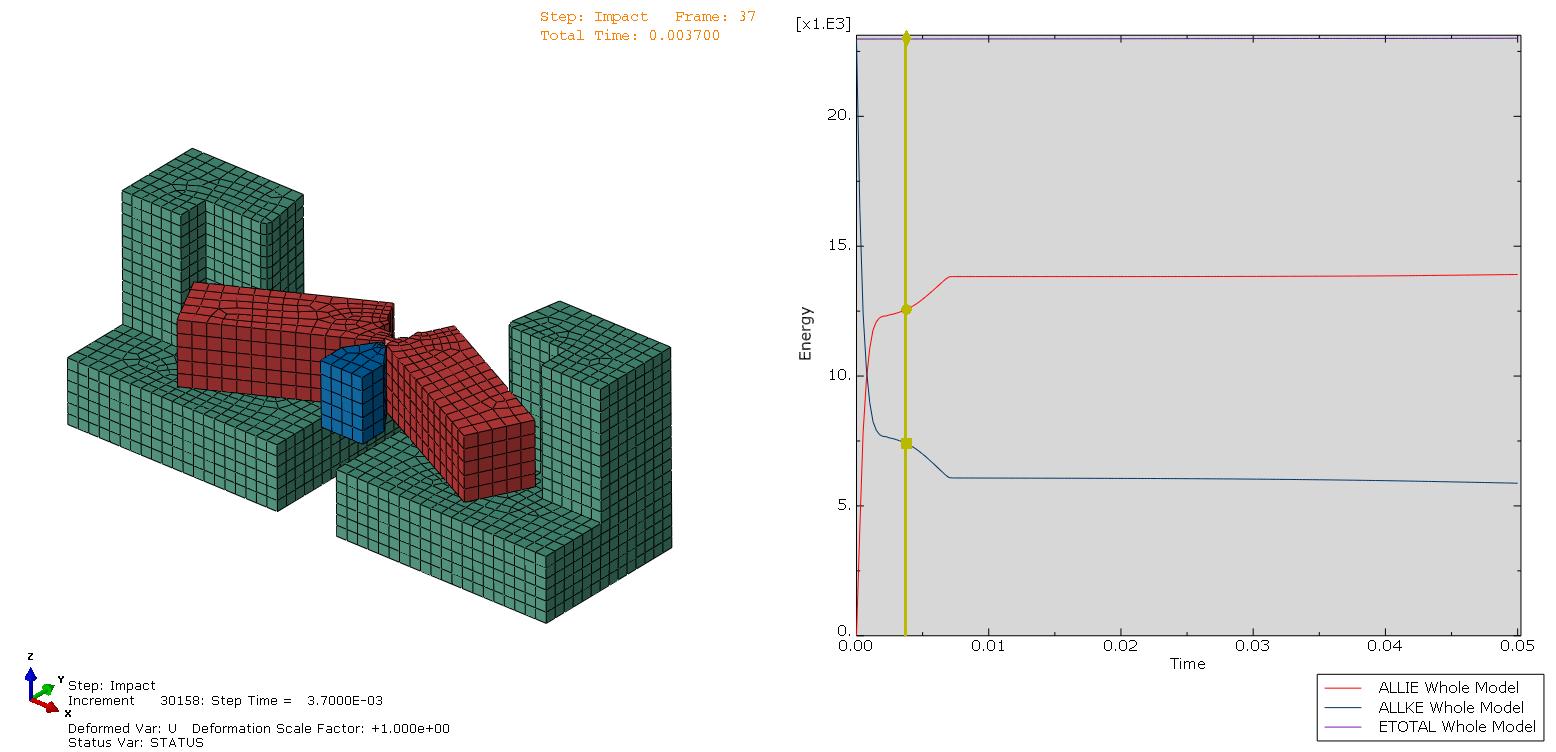
15.08.2026 – Nodal Mass Distribution and Kinetic Energy Evaluation in Abaqus/Explicit: Element Centroids vs. Nodal Lumped Mass Formulations

Document Type: Technical White Paper / Computational Mechanics Reference Domain: Finite Element Analysis (FEA), Explicit Dynamics, Abaqus ODB Scripting Keywords: Abaqus/Explicit, ALLKE, Kinetic Energy, Lumped Mass Matrix, König’s Theorem, Element Erosion, Containment Analysis, Python ODB API Executive Summary In high-velocity explicit dynamic simulations—such as containment tests, rotor burst analyses, and Charpy impact tests—engineers often observe […]

13.04.2026 – Simulating Wheel Bearing Preload and Compliance in High-Performance Race Cars

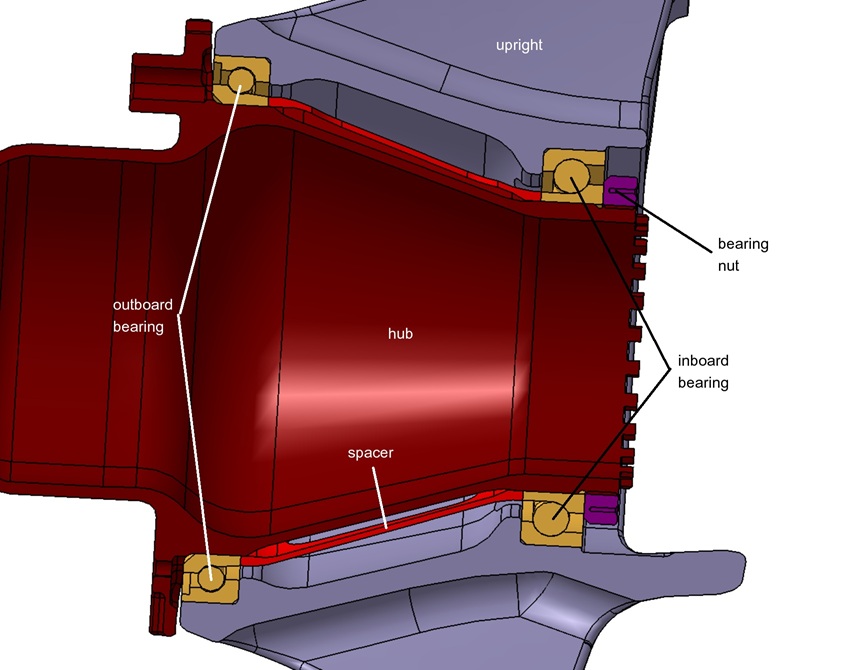
Document Type: Technical Reference / Automotive FEA Application Domain: Vehicle Dynamics, Wheel Assembly Mechanics, Bearing Preload Optimization Keywords: Wheel Bearings, Hertzian Contact Pressure, Preload Window, Camber Stiffness, Assembly Compliance, FEA Modeling, CG CAE Executive Summary In motorsport engineering, wheel bearings represent a critical yet frequently underestimated link in the load path between the tire contact […]

03.04.2026 – Topology Optimization in Practice: From Wheel Uprights to Spaceframe Monocoques

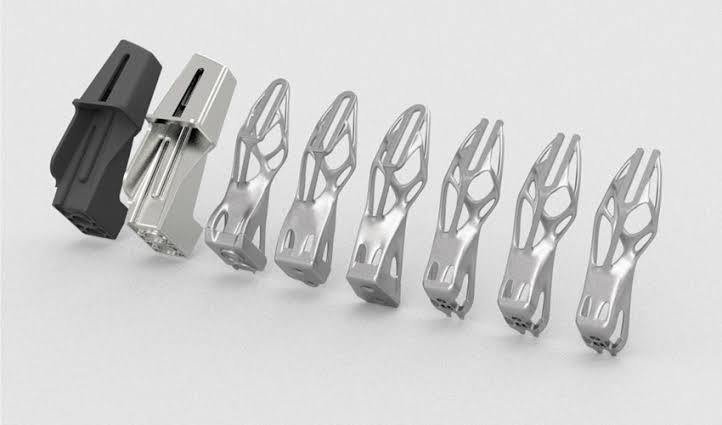
Document Type: Technical Article / Case Study Insights Domain: Finite Element Analysis (FEA), Structural Optimization, Automotive Engineering Keywords: Topology Optimization, Upright Design, Monocoque, Torsional Stiffness, Additive Manufacturing, Spaceframe, CG CAE Executive Summary Topology optimization is often celebrated for its ability to produce striking, organic geometries. However, in high-performance automotive and motorsport engineering, it serves a […]

27.03.2026 – The Idea of “Mechanical Engineering”

💡 Each time I think about what could better represent the idea of 𝐌𝐞𝐜𝐡𝐚𝐧𝐢𝐜𝐚𝐥 𝐄𝐧𝐠𝐢𝐧𝐞𝐞𝐫𝐢𝐧𝐠, well, 𝐠𝐞𝐚𝐫𝐬 always jump into my mind 😬 🔦 The example in the animation is a 𝐧𝐨𝐧 𝐥𝐢𝐧𝐞𝐚𝐫 𝐝𝐲𝐧𝐚𝐦𝐢𝐜 𝐭𝐫𝐚𝐧𝐬𝐢𝐞𝐧𝐭 𝐚𝐧𝐚𝐥𝐲𝐬𝐢𝐬, solved with the implicit approach. The non linearity is coming from both the 𝐥𝐚𝐫𝐠𝐞 𝐝𝐢𝐬𝐩𝐥𝐚𝐜𝐞𝐦𝐞𝐧𝐭 and the 𝐜𝐨𝐧𝐭𝐚𝐜𝐭 between […]

19.03.2026 – “Linear Contact” Is an Oxymoron: Understanding Boundary Non-Linearity in FEA

Document Type: Technical Article / FEA Methodology Domain: Finite Element Analysis (FEA), Contact Mechanics, Boundary Non-Linearity Keywords: Linear Contact, Contact Mechanics, Stiffness Matrix, Tied Contact, Non-Linear Solvers, Abaqus, CG CAE Executive Summary In structural engineering discussions, the phrase “linear contact in FEA” is frequently tossed around to describe simplified contact setups in finite element software. […]

15.01.2026 – Estimating Local Plastic Deformation from Linear FEA: The Neuber Correction Method

Document Type: Technical White Paper / Structural Mechanics Reference Domain: Finite Element Analysis (FEA), Non-Linear Material Behavior, Fatigue & Fracture Mechanics Keywords: Neuber Rule, Elastic-Plastic Stress-Strain, Yield Criterion, Ramberg-Osgood, Local Plasticity, Strain Energy Density Executive Summary In structural finite element analysis (FEA), large-scale models featuring contact non-linearities and complex assembly constraints often rely on linear […]

Virtual Prototyping: The Critical Bridge Between Design and Structural Integrity

Document Type: Engineering Methodology / Best Practices Domain: Finite Element Analysis (FEA), Structural Engineering, Design Validation Keywords: Virtual Prototyping, Structural Integrity, Solid Mechanics, FEA Theory, Quality Assurance, CG CAE Executive Summary Verifying the structural integrity of mechanical components is a non-negotiable phase in the design lifecycle, particularly for load-bearing applications where failure is not an […]

09.06.2025 – Load Case vs Load Step

It might happen that new starters in Structural Analysis based on Finite Element Models tend to get confused by what is a Load Case (SUBCASE, using the Nastran definition) with what is a Load Step (*STEP, using the Abaqus definition). The Load Case is used in linear static analyses and it is composed by a set of […]

15.04.2025 – Back To Buckling

Because we touched the topic in two occasions on these pages (Post Buckling Analysis of a Frame and The Buckling Analysis and Test of a PushRod for a Race Car Suspension) we come back on it  with this article, trying to give more insights on the instability of structures. To make things more understandable, we […]

04.03.2025 – The Simulation of a Gyroscope

The Gyroscope is a quite fascinating piece of mechanics, though very simple, and for sure everyone  in their life has at least once seen and even played with one. The part is simple, but the phisics behind it is not so intuitive; we are not going to enter into the equations that gouverne the behaviour […]

24.02.2025 – The Composite Materials Failure Index in Abaqus

Knowing the material limits in terms of structural strength is paramount to assess if a given structure can withstand the loads for which it is designed, and which reserve it has to allow for unexpected higher loads. If for ductile materials this process is very well consolidated and generally based on the Von Mises stress […]

07.02.2025 – The Dimensional Factor in Fatigue Analyses

Historically, fatigue tests are performed by rotating bending, i.e. cylindrical specimens are rotated while a load stresses them with a fixed direction in time: this way an alternating cycle from zero is easily obtained. Generally the specimens have a rather small diameter (maximum 10 mm) and it was discovered that, for specimens of larger size, […]

28.01.2025 – Post Buckling Analysis of a Frame

This example is taken from the book Computational Structural Engineering We have the planar frame shown in figure 11.22 through the related beam-type finite element model. From a first linear buckling analysis we find that Fcr = 10512 N. Clearly the element that becomes unstable is the diagonal A, as we can see from figure […]

21.01.2025 – Force Distribution on the Threads of a Screw in Bolted Connections

Every now and then every Structural Engineer has to asses fasteners against thread ripping, especially when non standard screws are used. In fact, in general, handbooks give the tightening torque for every nominal diameter and the load that the bolt can whithstand, assuming that both the screw and the nutscrew are made of steel. In […]

13.01.2025 – The Charpy Test Simulation

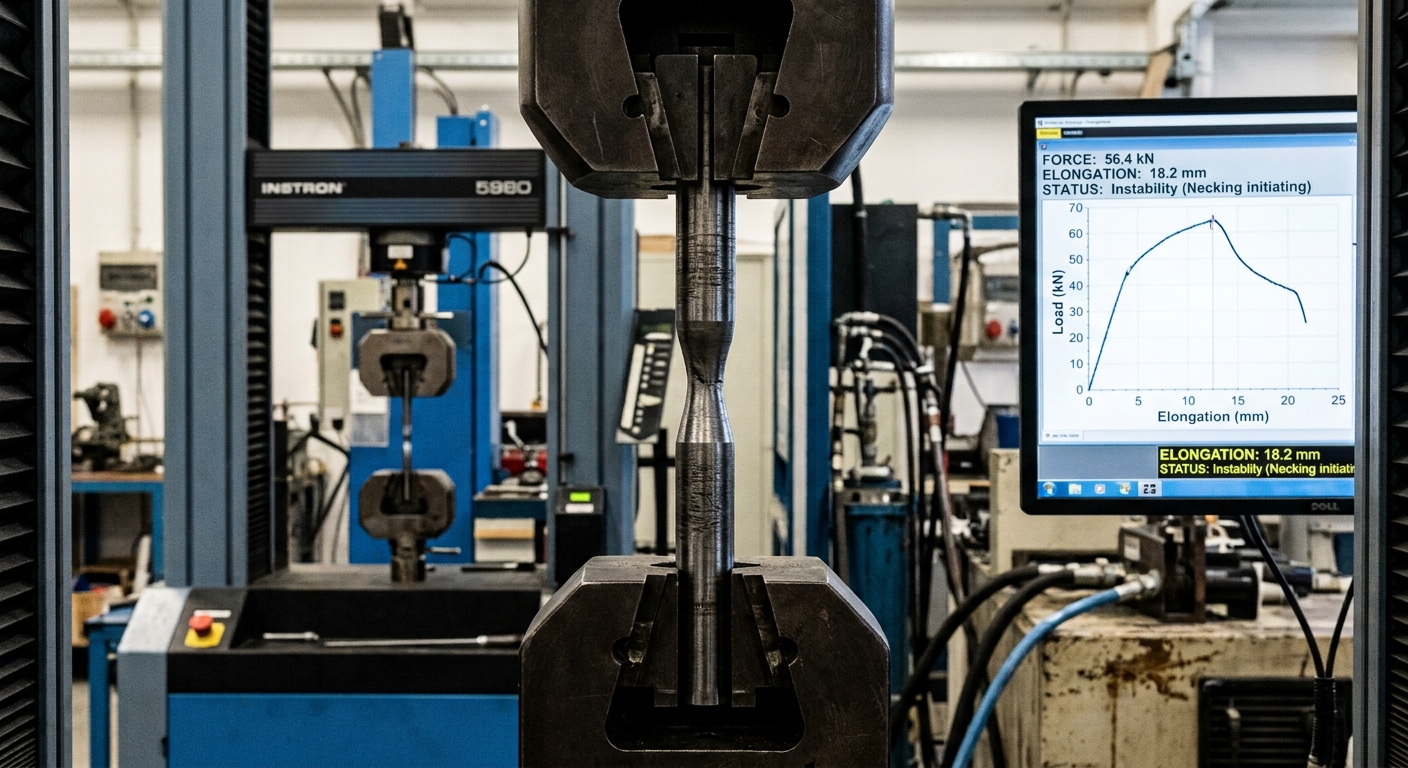
This simulation was done more for fun rather than being really useful to some design activity. Nonetheless it shows how powerful simulations can be. In this case the material properties used to simulate the tensile test shown in a previous news are here implemented into a Charpy Test coupon (U-shape notch) and the simulation is […]

08.01.2025 – Beyond the Plastic Behaviour of Ductile Materials: Non-Linear FEA and Structural Reserves

Document Type: Technical Article / FEA Methodology Domain: Finite Element Analysis (FEA), Material Non-Linearity, Solid Mechanics Keywords: Ductile Materials, Plasticity, Von Mises Yielding, Neuber Correction, Ductile Damage, Failure Simulation, CG CAE Executive Summary Accurately determining the load-bearing limits of a mechanical component is essential to guarantee structural safety while quantifying margin reserves under exceptional load […]

24.12.2024 – The First Ply Failure Approach in Composite Structures: Is It Really the End?

Document Type: Technical Article / FEA Methodology Domain: Composite Materials, Finite Element Analysis (FEA), Structural Optimization Keywords: First Ply Failure, Progressive Failure Analysis, Composite Laminates, Abaqus, Failure Index, CG CAE Executive Summary Imagine this scenario: you have spent days setting up a complex finite element model for a composite structure. You’ve meticulously defined the layup, […]

09.12.2024 – The Preload Simulation with the “Thermal” Method

In general the application of a preload inside a member in a Finite Element Model is done by the code by applying MPC equations to the nodes laying on the surface where the preload is to be applied; for example in a bolt modelled with solid elements, the shank will be split at the surface […]

02.12.2024 – The “Superelement” Technique

At the times when low computational power and low memory capacity were available, the Superelement technique (more precisely defined as “substructuring“) was used to solve models with a high number of DOFs, while still staying within the limits imposed by the hardware. The method consists in dividing the complete structure to be analysed into substructures; […]

25.11.2024 – The Submodeling Technique

As well known, it is generally a good practice, in a finite element analysis, to perform several iterations of calculation of the same structure in order to determine what is the best mesh density to obtain reliable results. In our days the necessity to try and reduce the commitment of the calculation resources is less […]

21.11.2024 – HEX8 vs TET10 Elements: the everlasting debate

I think I am not exaggerating if I say that worldwide the FEA community recognizes that the “best” element type for 3D structures is the hexahedron element (the so-called brick element), especially in its linear formulation (linear shape functions – 8 nodes per element), where with “best” I mean the optimal compromise between model size […]

28.10.2024 – Clarifying Fatigue Assessments in Structural Engineering

Fatigue assessments are never an easy task, but they are not impossible. FE results on one side give a bunch of information that might confuse and on the other pose questions on both the notch sensitivity and dimensional coefficients. In Chapter 10 of the book “Computational Structural Engineering” the reader is guided through all those […]

28.10.2024 – Bolt Analysis

In Chapter 17 of the book “Computational Structural Engineering” a very deep analysis of a “simple” bolted connection is presented: influence of preload and friction are discussed and failure is simulated. Finally, a comparison between the implicit and explicit approaches (which are discussed in Chapter 14) is also presented.https://www.cgcae.com/wp-content/uploads/2024/10/Boltfailure.mp4

24.10.2024 – O-Ring Deformation: Nonlinear Axisymmetric Analysis

Here is one case where axisymmetric elements can give great results in very short times, even when dealing with hyperelastic materials! In this case an O-Ring is stretched into its position (this phase is not reported here, but maybe in a future post it will) and then the outer tube is pushed to assemble the […]